
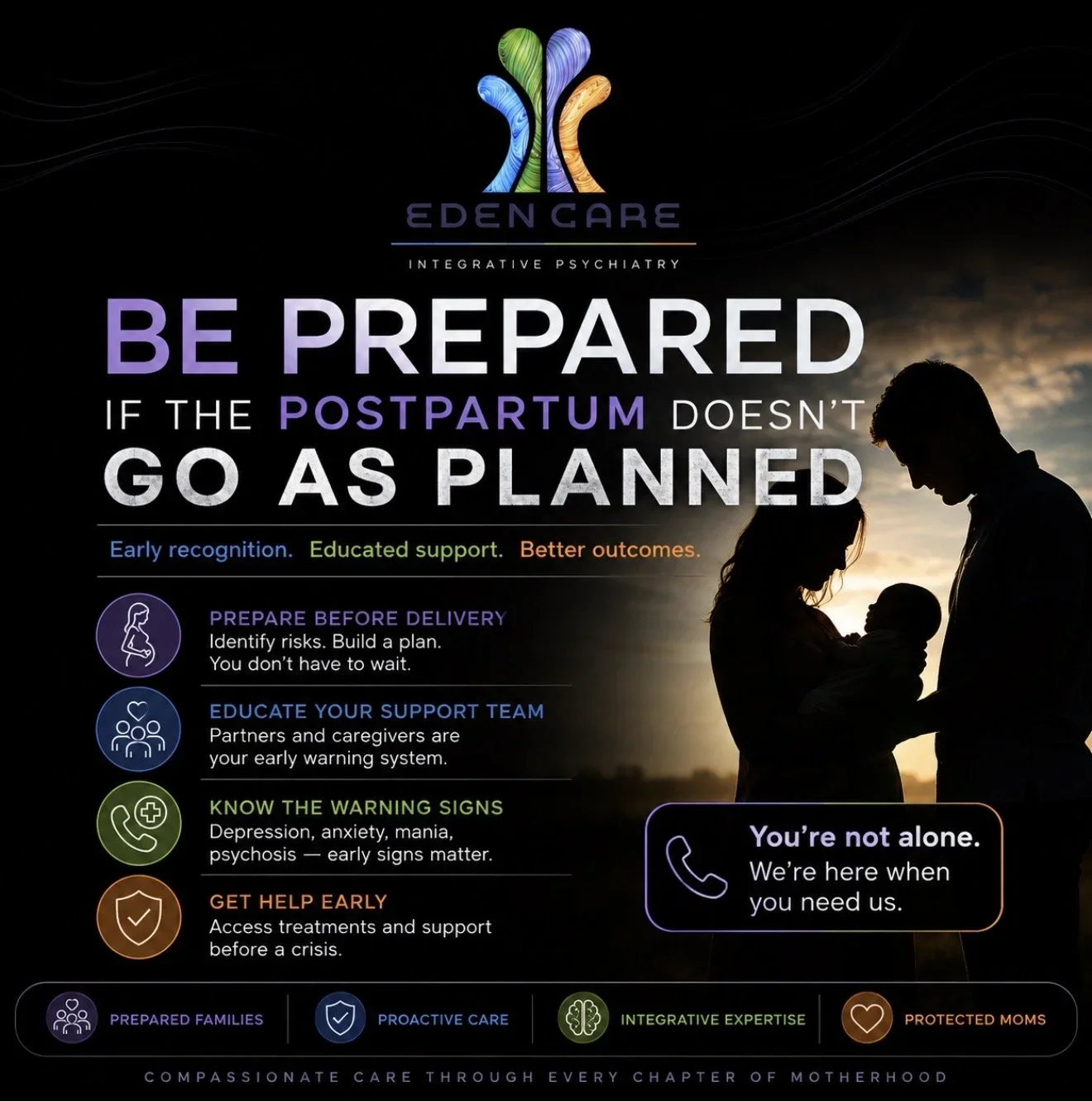
Most families spend months planning for delivery. Far fewer plan for the weeks after it. This is part one of a two-part series on postpartum mental health. Part two covers the biology behind postpartum mood changes.
Mood and anxiety symptoms are common after birth, and they are medical, not a personal failing. A little preparation makes it easier to notice a problem and to get help quickly if one develops.
Prepare before delivery
Talk with your obstetric provider, your primary care provider, or a mental health clinician during pregnancy about your own history. Past depression, anxiety, bipolar disorder, a difficult prior postpartum period, and poor sleep are all worth mentioning. Write down who you would call and where you would go if you started to struggle. You do not have to wait until something is wrong to make that plan.
Educate your support team
Partners, family members, and close friends often notice changes before the new mother does. Tell them what to watch for and give them permission to speak up. Decide ahead of time who will help protect your sleep, who will handle meals, and who will come with you to an appointment if you need one.
Know the warning signs
Sadness, tearfulness, or hopelessness that lasts beyond the first two weeks
Anxiety, panic, or racing thoughts that will not settle
Unwanted, frightening thoughts that keep returning
Feeling unusually energized, needing very little sleep, or acting out of character
Confusion, seeing or hearing things others do not, or beliefs that seem strange to the people around you
The last two groups can be signs of a medical emergency. They call for same-day evaluation.
Get help early
If something feels off, say so, and ask for an evaluation instead of waiting to see whether it passes. Call your obstetric provider or a mental health clinician. Support and treatment are available, and reaching out early is always reasonable.
If you need help now
If you or someone you know is in crisis, call or text 988 for the Suicide and Crisis Lifeline. For perinatal-specific support, Postpartum Support International operates a helpline at 1-800-944-4773. In an emergency, call 911 or go to the nearest emergency department.
To talk with our team about care during pregnancy or after delivery, start with our new patient intake or call 518-636-5284.
This article is general education and is not a substitute for care from your own clinician.
